Giving elite sports teams a competitive edge
Outsmart Insight helps a sporting institute get the full picture of technological innovation
The opportunity
The innovation team at a leading sports institute wanted to help athletes maintain and grow their competitive edge by staying at the forefront of emerging technology.
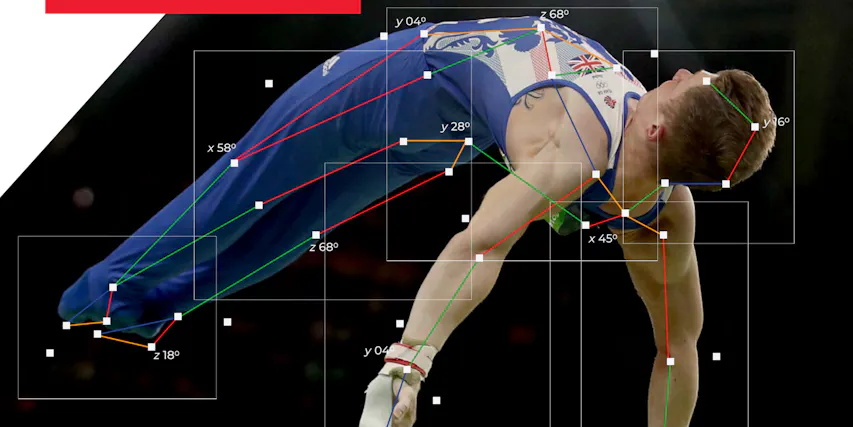
The problem was that relevant breakthroughs were no longer confined to traditional sports science. Innovations were popping up across startups, medical research, corporate R&D, and in sectors where the team did not necessarily have expertise: aerospace, robotics, neuroscience, and even gaming.
For the innovation team, this created opportunity and risk. They understood that the right emerging technology could well provide an advantage for athletes and coaches. But without a systematic view of the external landscape, they risked missing important opportunities and underestimating competitive threats from other competitor nations.
Simply put, the team needed a complete and regularly-updated view of relevant innovations from around the globe. They also needed this intelligence to be practical: not simply a list of interesting articles, but a curated set of signals that could be understood, discussed and acted upon by people inside the Olympic performance system. By solving these challenges, the innovation team could better contribute to future sporting success.
The solution
Outsmart Insight designed and delivered a technology horizon scanning service. Innovations were structured around three taxonomy areas: prescription and monitoring, behaviour change, and skill acquisition and decision-making. We first assembled a 15-person expert team with a diverse range of experience to capture the widest possible range of signals: everything from electronic and aeronautical engineering to psychology and neuroscience.
The team scanned over 2,000 source articles from which more than 140 signals were captured, tagged and amplified. The institute's team then filtered these signals to identify those with the greatest potential. Featured innovations included advances in non-invasive monitoring of cardiovascular and respiratory activity, machine learning for analysing training footage, and smart bandages for faster healing.
The final output was a Technology Watch publication. The document opens with a foreword from the institute, followed by an introduction explaining the purpose of the work and the selection process. The reader then can explore each signal, which is written in a consistent, engaging format. Rather than simply describing a technology at a high or overly detailed level, every article crisply explains what the innovation is, how it works, and the practical caveats that the institute should consider before acting. This style of writing meant that the report was accessible to a wide audience.
To help the team move to action, each signal was linked to its own page on the institute's secure internal platform for gathering ideas. This allowed the publication to become a stimulus for discussion, feedback and follow-up decision making.
The impact
The institute went from having a patchwork and noisy understanding of the global innovation landscape to a comprehensive, curated perspective of how innovations could link to improved athletic performance. This gave them actionable signals for coaches, practitioners and decision-makers, and also helped the team better scrutinise claimed technology use by competitor nations. Just as importantly, the work created a shared language for discussing innovation.