The Challenge
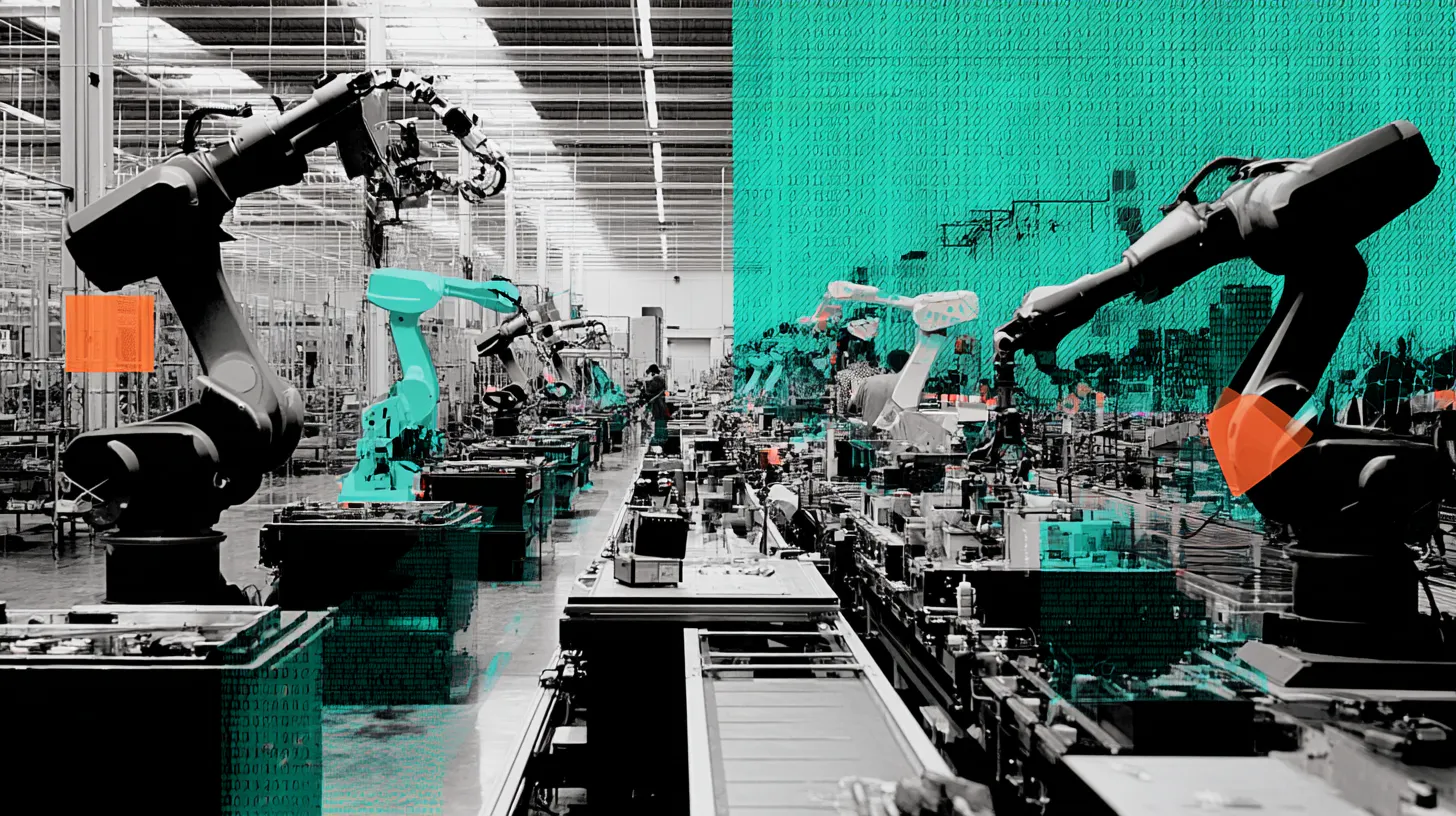
A sustainability leader at a global defence engineering company wanted to increase manufacturing capacity while reducing environmental impact. There is currently pressure on the defence sector to produce short production runs of autonomous platforms such as drones. The challenge is to manufacture at scale and on demand using highly configurable manufacturing lines, but without compromising on sustainability.
The client needed more than a broad review of automation. They needed evidence of where robotics technologies were heading, which innovations were becoming commercially viable, and how comparable manufacturers were improving productivity while reducing lead times, costs and emissions.
Previous work had been too generic, reinforcing familiar ‘robots to cobots’ narratives rather than challenging them with actionable insight. The team also needed to avoid duplicating existing initiatives, navigate competing priorities and engage busy manufacturing stakeholders who would mobilise around a story grounded in operational value, not sustainability alone.
If these challenges could be overcome, the opportunity was to build a shared technology vision across sustainability and manufacturing and equip the organisation with a roadmap for sustainable and scalable production.
The Solution
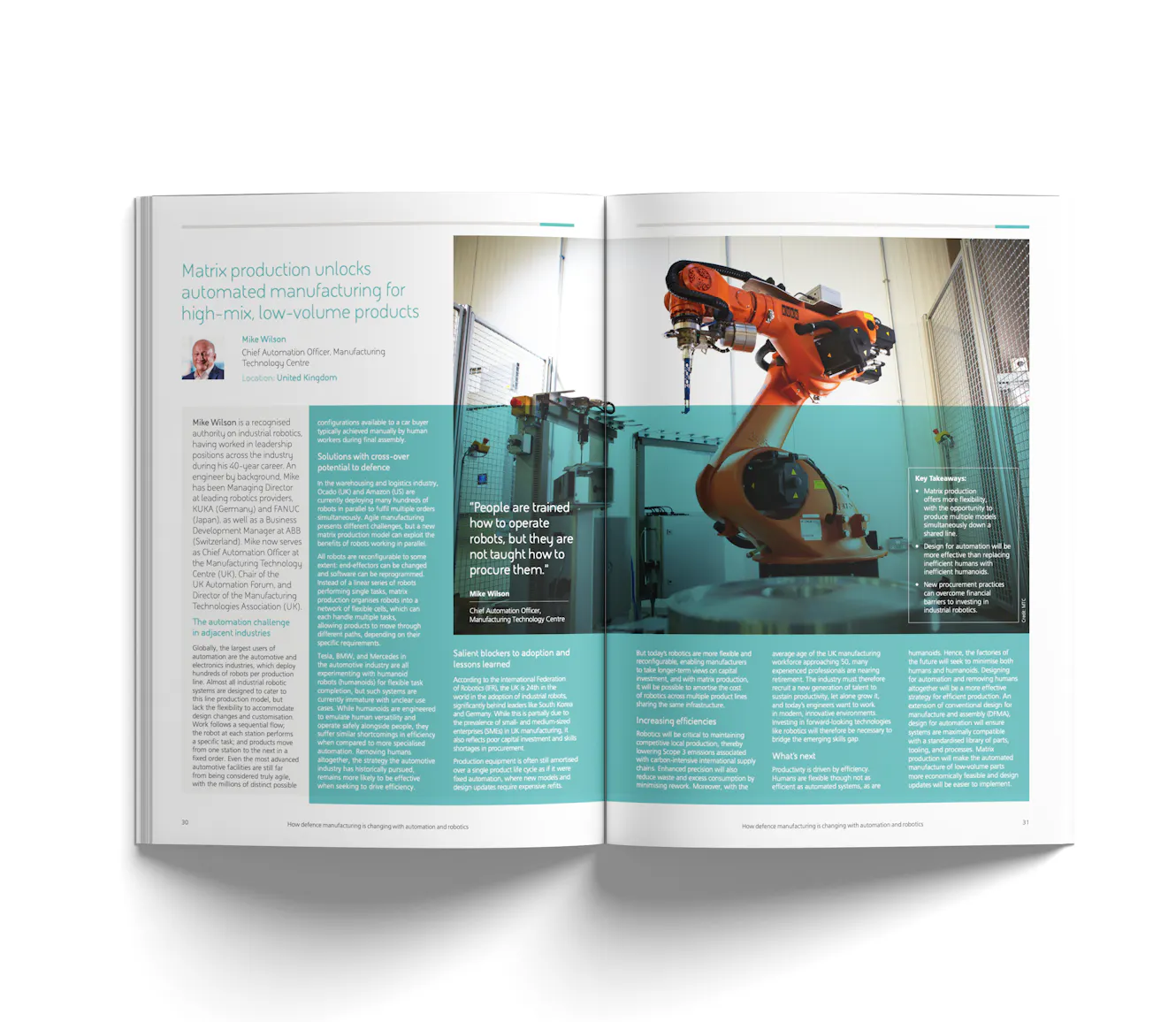
Working collaboratively with the client’s sustainability and manufacturing teams, Outsmart designed a bespoke Trend Foresight study combining horizon scanning, expert insights and evidence-led technology assessment. This included interviews with the client’s head of manufacturing and manufacturing technology leads, ensuring internal perspectives were integrated to strengthen stakeholder buy-in and create internal social proof.
Experts with relevant experience from Outsmart’s global network scanned the landscape for recent innovations, assessing them for technical maturity, manufacturing applicability, sustainability impact and potential to improve productivity, resilience or production flexibility. In addition, technology pioneers from a broad range of non-defence industries, including automotive, civilian aerospace, and logistics, provided their perspectives on manufacturing automation and its future development.
“Artificial Intelligence is improving adaptability, with fixed automation predicted to be 10% of its current size in ten years.”
— Study Contributor
Domain experts then mapped the innovations to Outsmart’s three horizon framework: business, engineering, and scientific. This approach distinguished technologies already deployed in industry from emerging engineering solutions and early-stage scientific breakthroughs, giving stakeholders a clear view of current opportunities and future capabilities.
The final study combined this analysis with an executive-level summary that synthesised the individual inputs into a narrative for senior leaders, helping to create internal momentum and highlighting the implications of cross-cutting adoption drivers, enabling technologies and technology dependencies.
Report Insights
- Product design is the biggest challenge: Simply adding robots to an existing factory rarely delivers the expected benefits. Since most defence platforms were originally designed for human assembly with tight spaces that robots struggle to access, designing for manufacture from the outset determines whether robotics can deliver sustainability and productivity gains.
- Automation can improve sustainability despite electricity consumption: Higher precision means less material waste and rework steps, while improved efficiency allows smaller factory footprints. For existing robots, optimising toolpaths with AI can cut energy consumption by 20–30%.
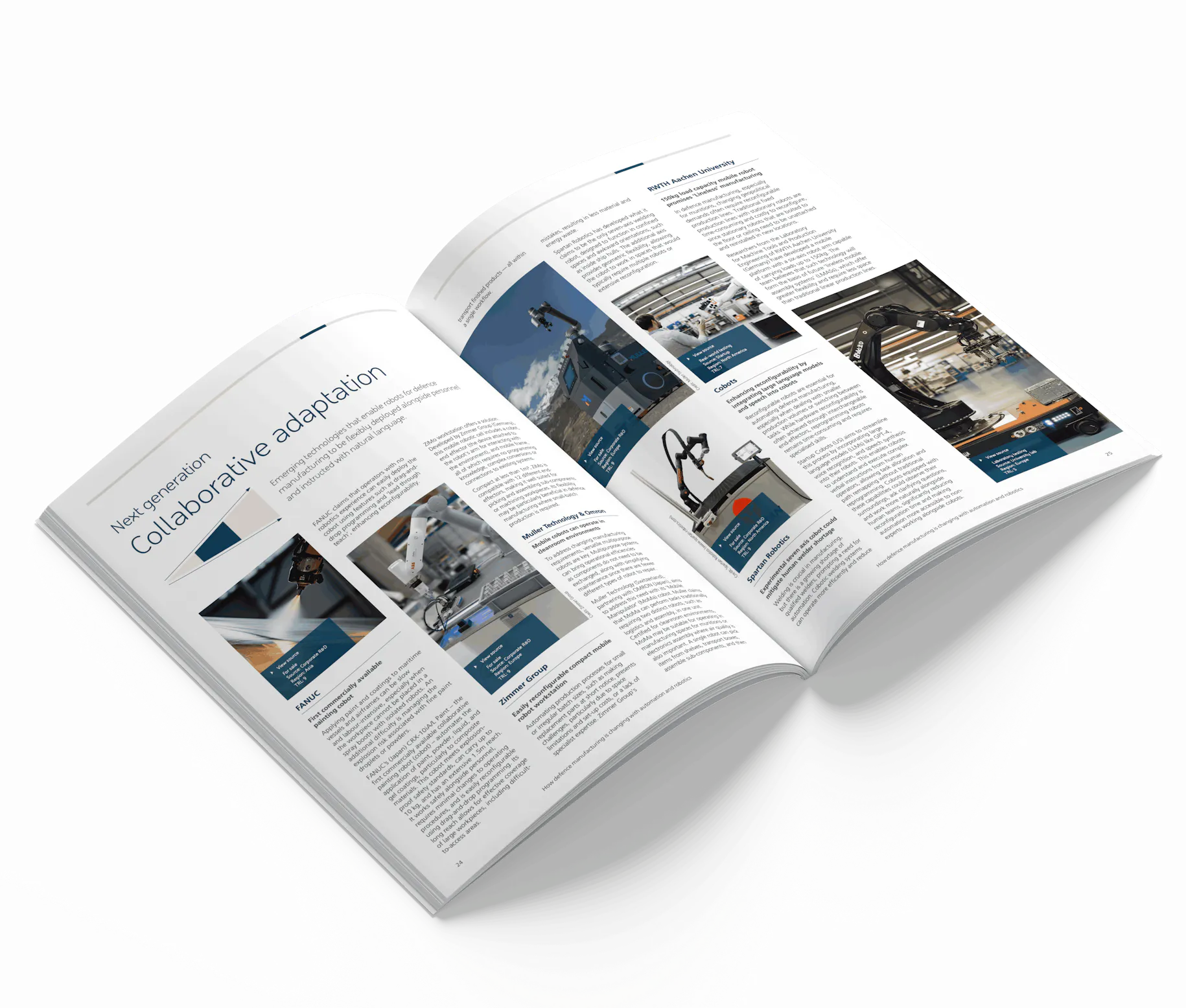
- Reconfigurability beats full autonomy: Future factories will use fleets of adaptable robots working alongside humans, with instructions to switch tasks provided in natural language. Given rapidly changing production requirements, prioritising flexibility rather than maximum automation may provide a competitive advantage.
“80% of environmental impact outcomes are fixed at the point of design.”
— Study Contributor
The Value and Impact
For the sustainability team, the work provided a broad, long-term view of how future robotics and automation could improve manufacturing sustainability alongside agility and uptime. This assured them that coverage was comprehensive and helped the team assess the likely pace of adoption, while providing an evidence base for sustainability benefits that carried weight as it came from peer organisations.
Beyond that awareness, the study delivered a wider organisational benefit: it deepened the partnership between sustainability and manufacturing, laying the groundwork for coordinated investment and planning in advanced manufacturing technologies across the enterprise. As a result of the study, the client planned specific sustainable manufacturing programmes for the following year.