The Challenge
A defence research organisation needed to understand how advances in healthspan technology could reshape the way armed forces operate in the future.
The internal customer needed to produce a paper that would do more than summarise the science. It had to stimulate debate, shape thinking and clearly articulate the implications for defence. At an organisational level, leaders needed a view of what emerging healthspan technologies could mean for future capability, operational readiness, duty of care and long-term strategic advantage.
The challenge was making sense of a fast-moving and fragmented technology landscape. Advances in AI-enabled drug discovery, longevity therapeutics, regenerative medicine and gene therapies were progressing at different rates, while existing research rarely translated scientific developments into a defence context.
The goal was to build a clear, evidence-based map of the healthspan innovation landscape, the scenarios defence leaders should start preparing for, and concrete recommendations that could travel up and down the chain.
The Solution
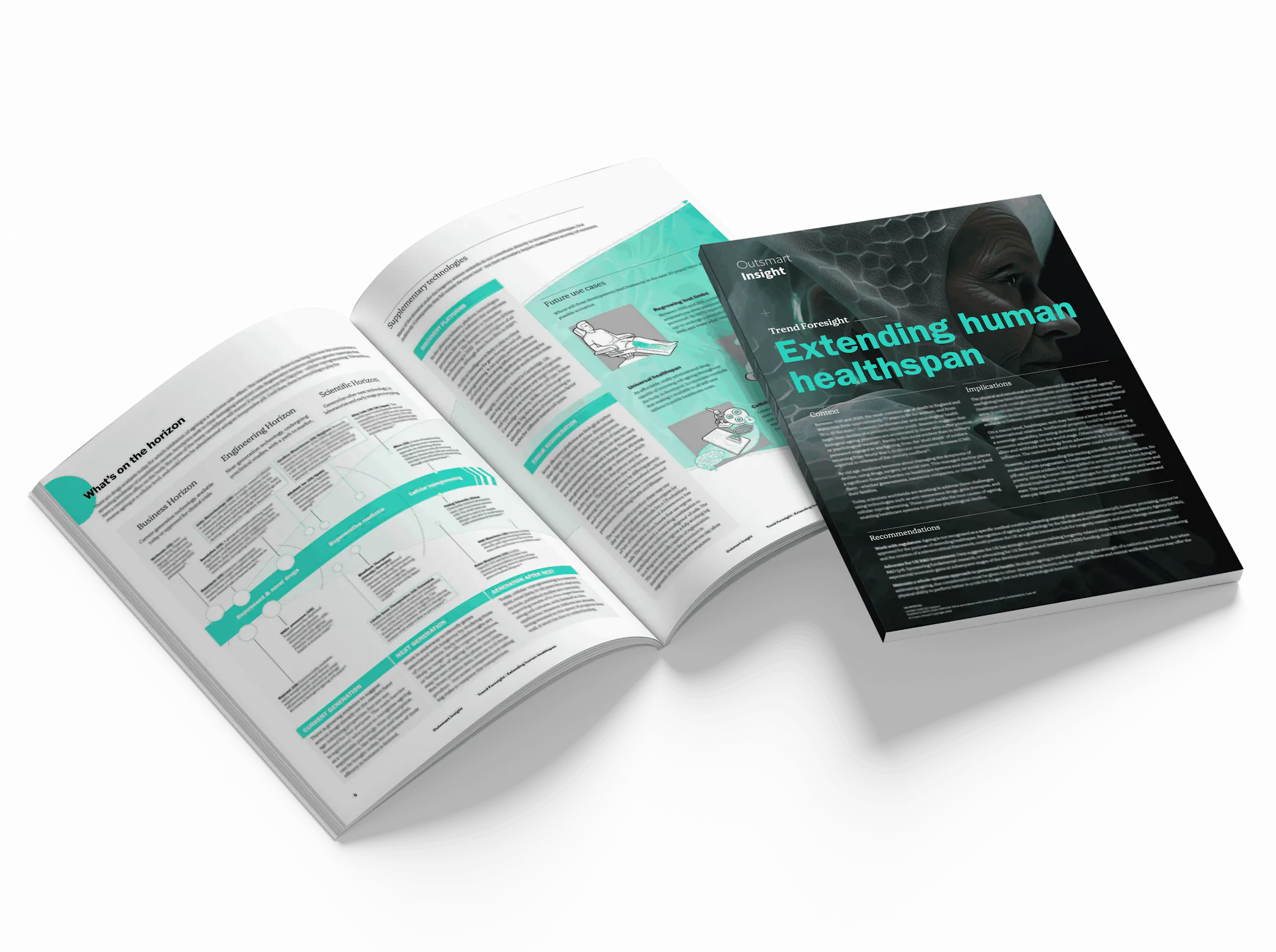
Outsmart Insight designed a bespoke Trend Foresight study combining horizon scanning, technology analysis and expert insight.
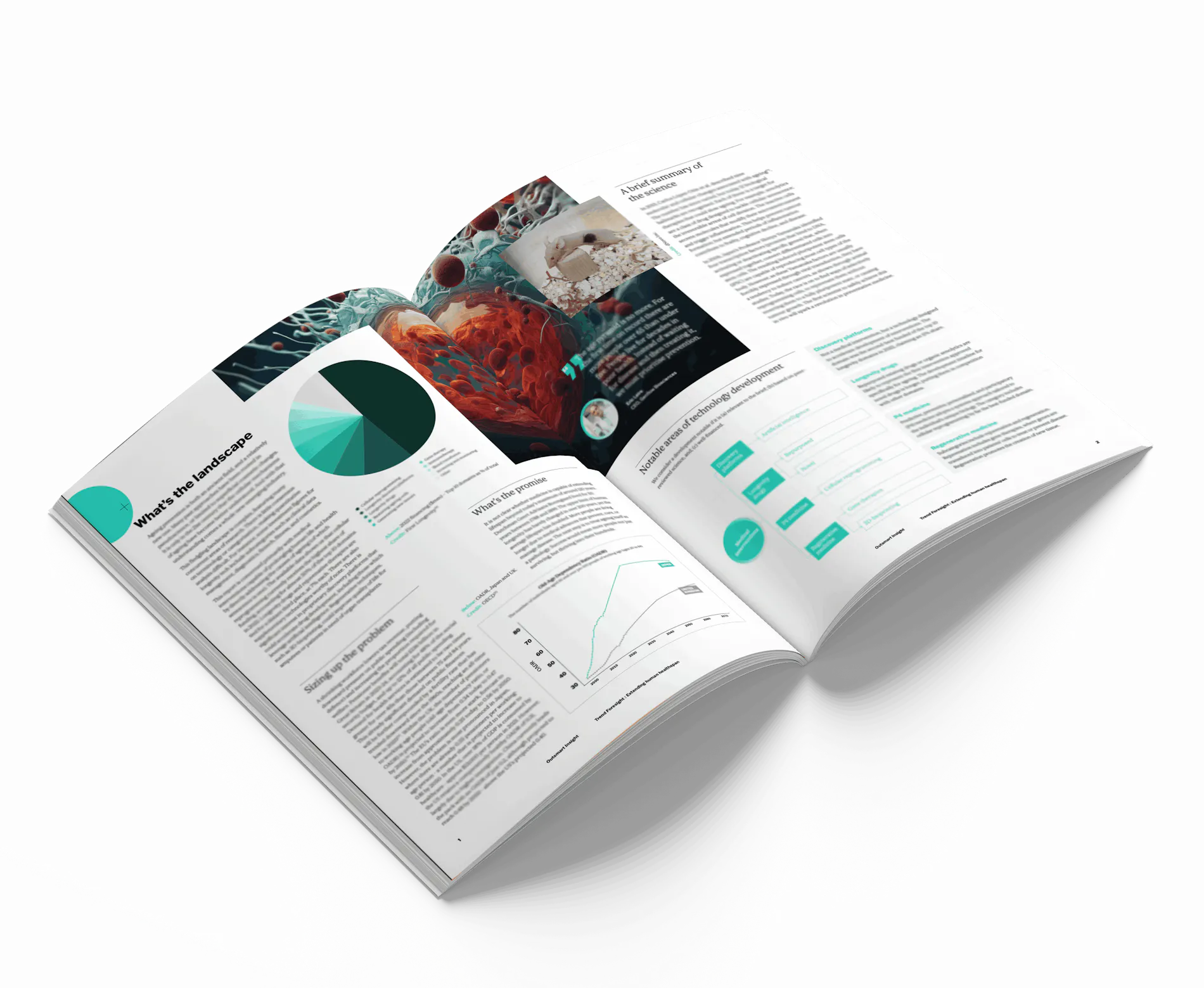
To structure the landscape, Outsmart started by building a bespoke technology taxonomy including discovery platforms, longevity drugs, predictive, preventative, personalised and participatory (P4) medicine, and regenerative medicine. Next, we assembled a multidisciplinary team of more than 50 relevant experts from our global network of over 8,500 scientists, engineers, clinicians and technologists. Experts assessed developments in their specialist technology taxonomy area across biomedical research, defence medicine, ethics, human performance and policy.
Rather than catalogue every publication or startup, the research prioritised innovations that had implications for defence, were supported by peer-reviewed evidence and, where applicable, had meaningful commercial or investment activity. This filtering process reduced noise and ensured senior stakeholders could see credible pathways towards operational impact. Experts also conducted in-depth primary research interviews with technology pioneers and defence advisors, giving the reader deeper insights beyond the publicly available information.
Finally, the expert team mapped the innovations to Outsmart’s three horizons framework, distinguishing between technology on the business horizon and already in the market, prototypes on the engineering horizon, and laboratory demonstrations on the scientific horizon, providing the client with foresight so that they could understand when new capabilities were expected to arrive, and any technology precursors required.
Technology Highlights
- A regenerative medicine company developing a stem-cell-based treatment for Parkinson’s disease. The approach involves turning stem cells into dopamine-producing brain cells, then surgically placing them into the brain to replace cells lost to the disease.
- A gene therapy company focusing on a variant of a gene common among centenarians. Its approach uses intravenous infusion to provide extra copies of the gene variant and support DNA and telomere maintenance.
- A scaleup exploring cellular reprogramming, a way to make aged cells behave more youthfully without erasing their identity. By partially resetting the biological ‘software’ that controls cell function, the company aims to rejuvenate tissues and tackle diseases linked to ageing.
The Value and Impact
The project achieved its primary objective: giving the client a clear understanding of the rapidly evolving healthspan landscape, and highlighting the implications for defence.
Beyond improving understanding of an emerging technology area, the project delivered broader organisational value. By combining technical evidence with interviews from defence advisors and leading researchers, the report created a shared reference point that could be understood by both senior decision-makers and technical specialists. This made it easier to stimulate discussion around future capability, ethical considerations and long-term preparedness, while providing a repeatable framework for assessing other future technology trends.